 Angola, [a] officially the Republic of Angola, [b] is a country on the western coast of Southern Africa. It is the second-largest Portuguese-speaking (Lusophone) country after Brazil in both total area and population and is the seventh-largest country in Africa.
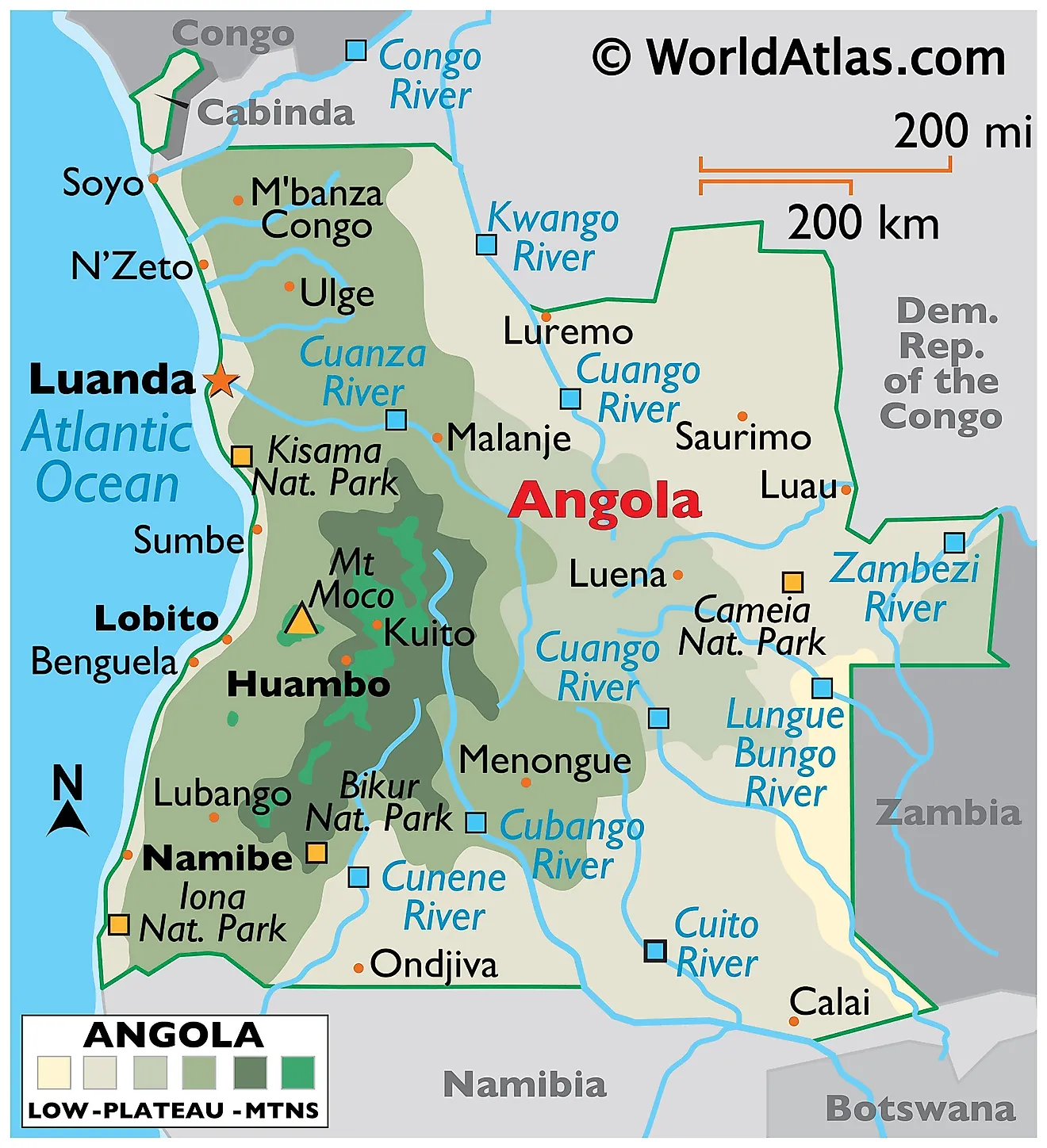 Angola is located on the southwestern Atlantic Coast of Africa between Namibia and the Republic of the Congo. It also is bordered by the Democratic Republic of the Congo and Zambia to the east.
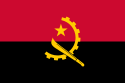 Angola, officially the Republic of Angola, is a country in southern Africa. It shares borders with Namibia in the south, the Democratic Republic of the Congo in the north, and Zambia in the east. Its west border touches the Atlantic Ocean. Its coastline is 1600 kilometers. Angola's capital is Luanda.